Installation of a Fiber-optic Internet System in my Neighborhood
Several months ago, in early 2026, men with electronic tracers marked our street in several colors to indicate where utilities were located underground. Then nothing happened for months! The news spread around the neighborhood that this was in preparation for fiber-optic Internet service to be installed, which turned out to be true. A company named Wecom Fiber is currently installing their service throughout Arizona. They are currently in construction in 6 areas, including Prescott, and have now reached my neighborhood. This post is to document this process for your general interest (and mine).
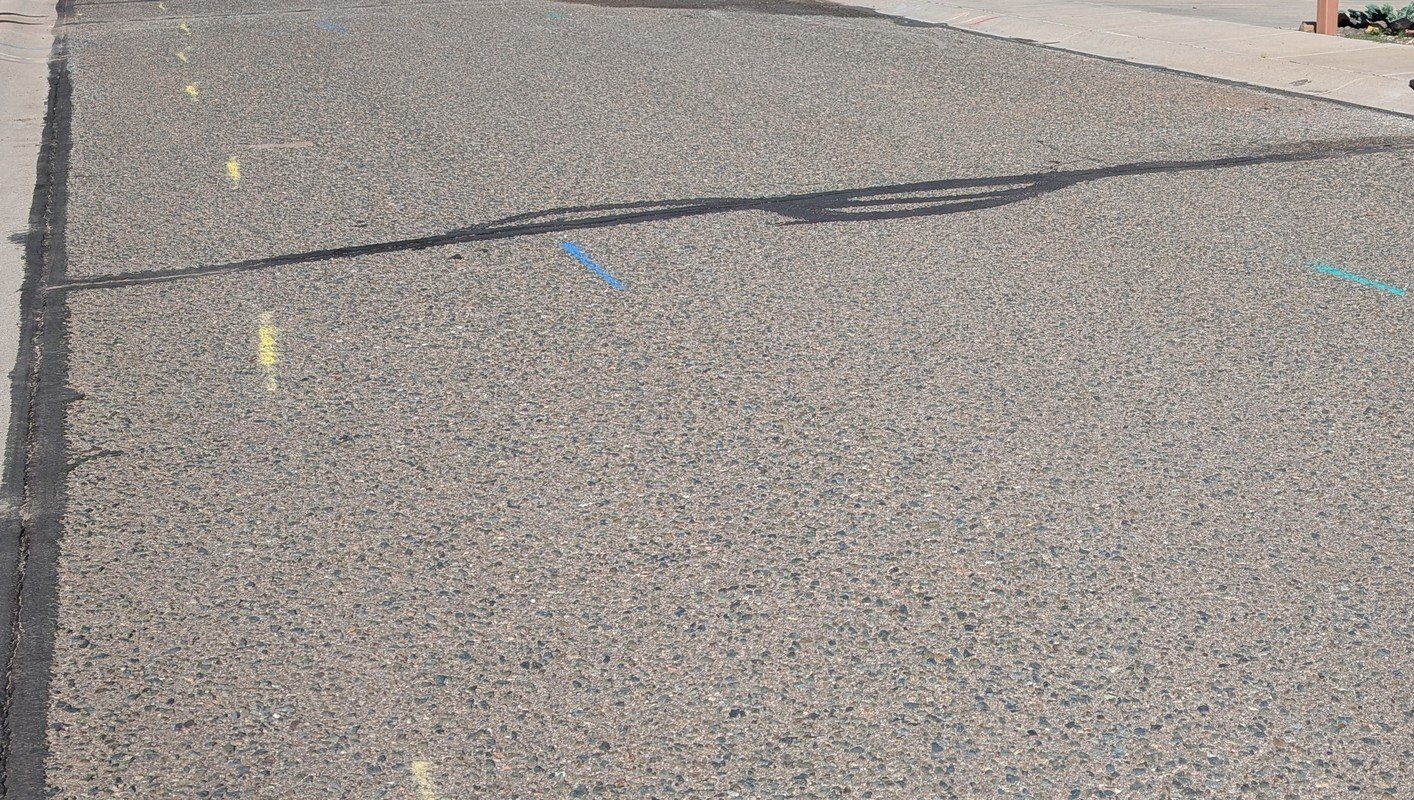
The street was marked to show underground utility locations. Yellow was gas, blue water, and green sewer.
Red was for power, but I no longer see any trace of that. Perhaps the sun and heavy rains took
care of that.
Our immediate neighborhood consists of 4 parallel streets of about 15 houses each side, and the street along one end which continues beyond one end in a hook shape. In July, we started to see construction caution signs several streets below ours. For quite a few weeks we could see this activity slowly move up one street at at time until in mid September they arrived at our street. With traffic cones and equipment everywhere, and flagmen at each end of the block, they drilled many 9 inch holes in the street. These holes were mostly forming lines across the street at or near property lines. There was a hole at each marked utility location, and there usually was a hole right at the curbs. Apparently these were for two purposes, locating utilities and providing access to house terminations and vaults. The holes are called hand holes.
After using a large hole saw on a very large drill press type machine to cut through the paving, they removed the cutout piece of the street and then continued digging down. For the utility detecting they used a long steel bar and a large vacuum hose to break up and remove the dirt as they went. They did this until they could find each utility run. The edge holes were only dug about a foot deep. After locating the utilities and assuring that they were well away from where they would be digging, they filled in those holes to about a foot depth. They also cut a large rectangular opening in the sidewalk in 3 locations along the block. They installed a distribution vault in each of those locations with a smaller removable cover which was then surrounded by blacktop.
When they finished for the day, all the holes were temporarily filled nearly full and the asphalt cutout replaced. This eliminated the danger of an open hole.
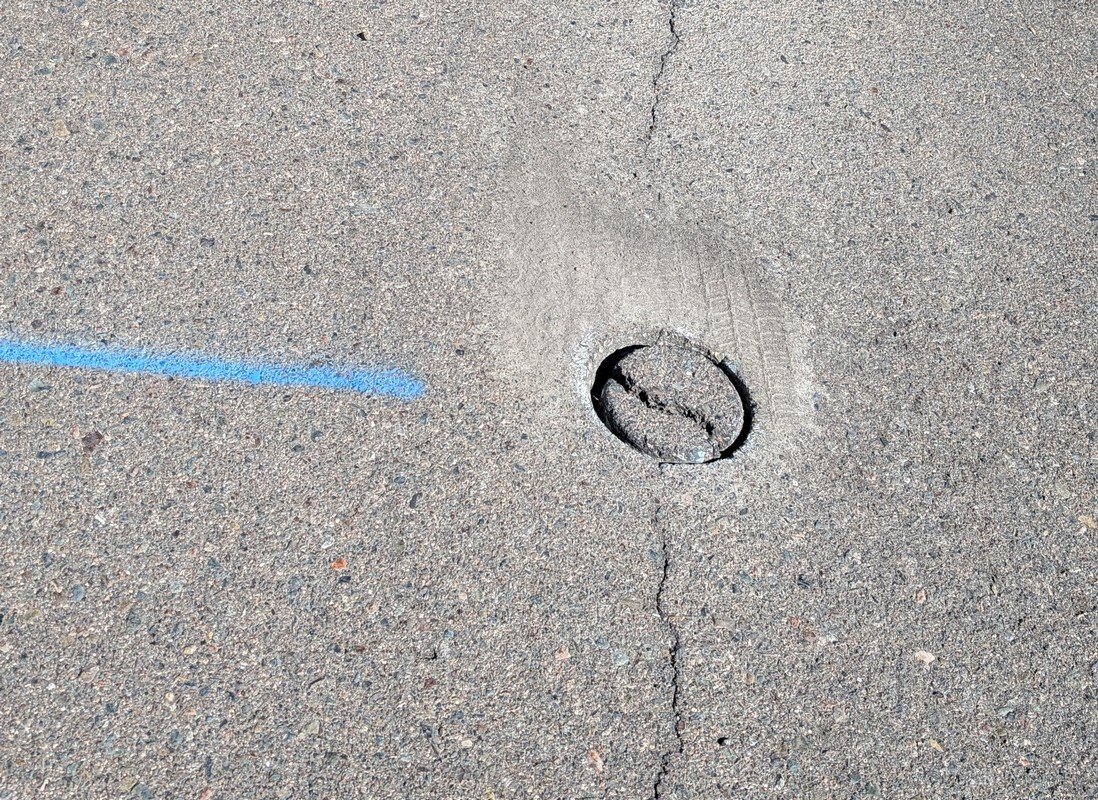
Between tasks, the holes were temporarily filled with the original cutout
For the next couple days the area was filled with specialized equipment to cut the slots in the street where the fiber would eventually live. For now all they were placing was the conduit which will eventually house and protect the actual fiber cables. Working several house widths at a time, they first stretched out the conduit along the path it would run. This allowed them to cut it to the proper lengths. They use two sizes of conduit, one that is about 3/4 inch diameter for the main runs, and a smaller 1/2 inch size for the individual feeds.
The conduit is run in a long slot along the north edge of the street where the asphalt meets the concrete curb. This is the main feed. At about 1 house width intervals, where the clusters of hand holes were drilled, other slots are cut across the street to hold the conduits to the individual houses.
They actually had two different machines to cut the slots. A small skid steer unit was used with a couple different attachments for different tasks. For the slotting it held a massive circular saw which thy used to cut the cross-street slots through the lines of hand holes. The curb slots were cut using a custom truck which held a powerful vacuum system and held a large saw behind it. This truck was capable of moving extremely slowly. While cutting it moved about 1 to 2 feet per minute, pulling the saw along the curb line.
Somewhere in this process, they placed a distribution box at each house for connecting to that house. They also tunneled under the curbs from the edge hand holes into the distribution boxes and into the vaults. They will at some point, probably when the service is ordered, continue burying conduit from the distribution box all the way to the house, and continue the fiber into the house where it will connect it to a special fiber modem.
After the slots were cut, there was quite a bit of time taken running all the various lengths of conduit and placing them in the slots.
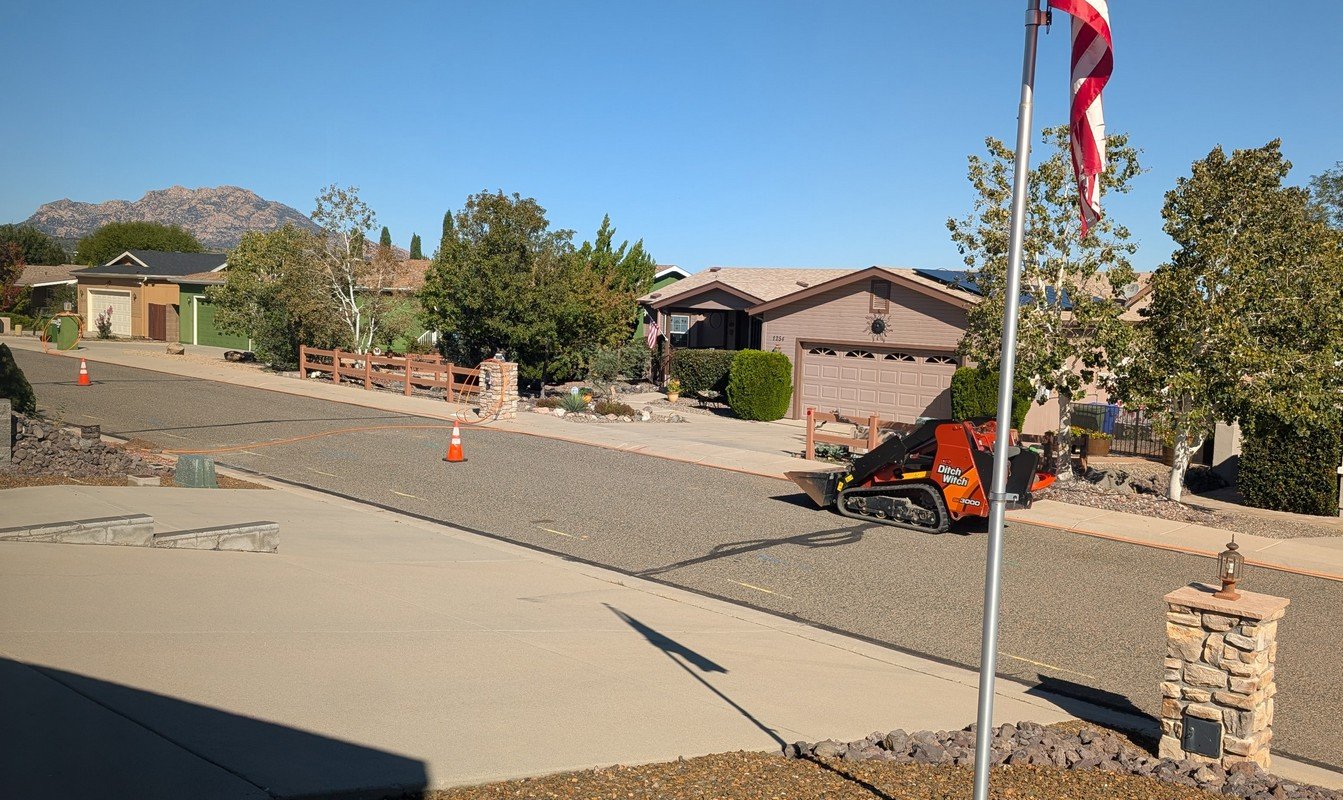
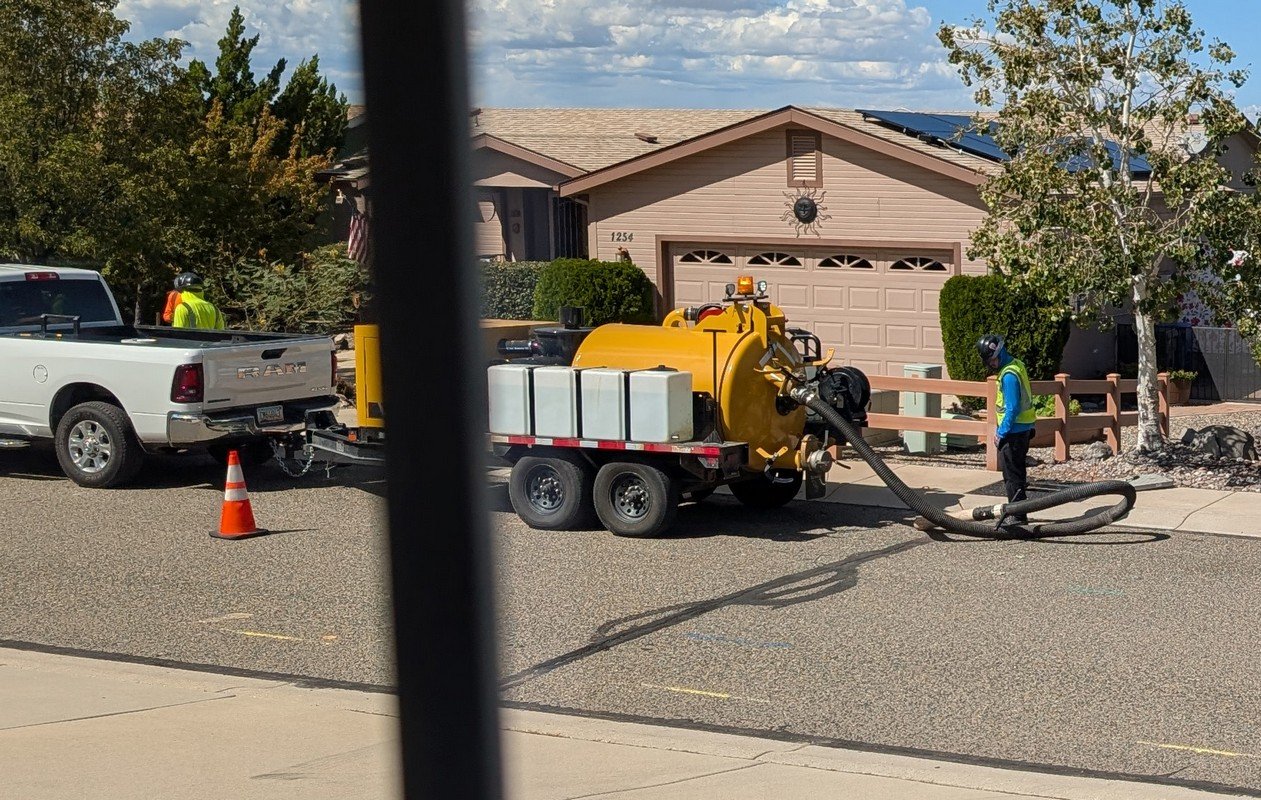
Looking carefully, you can see the orange conduit running along the far curb line and across the street beyond my driveway. After cutting to length, the various pieces were
coiled up for later use. On the right is their version of a shop-vac. It is used here to remove the excess dirt that held the cutouts up to street level. It was also used to collect
the debris from the skid steer slot cutter.
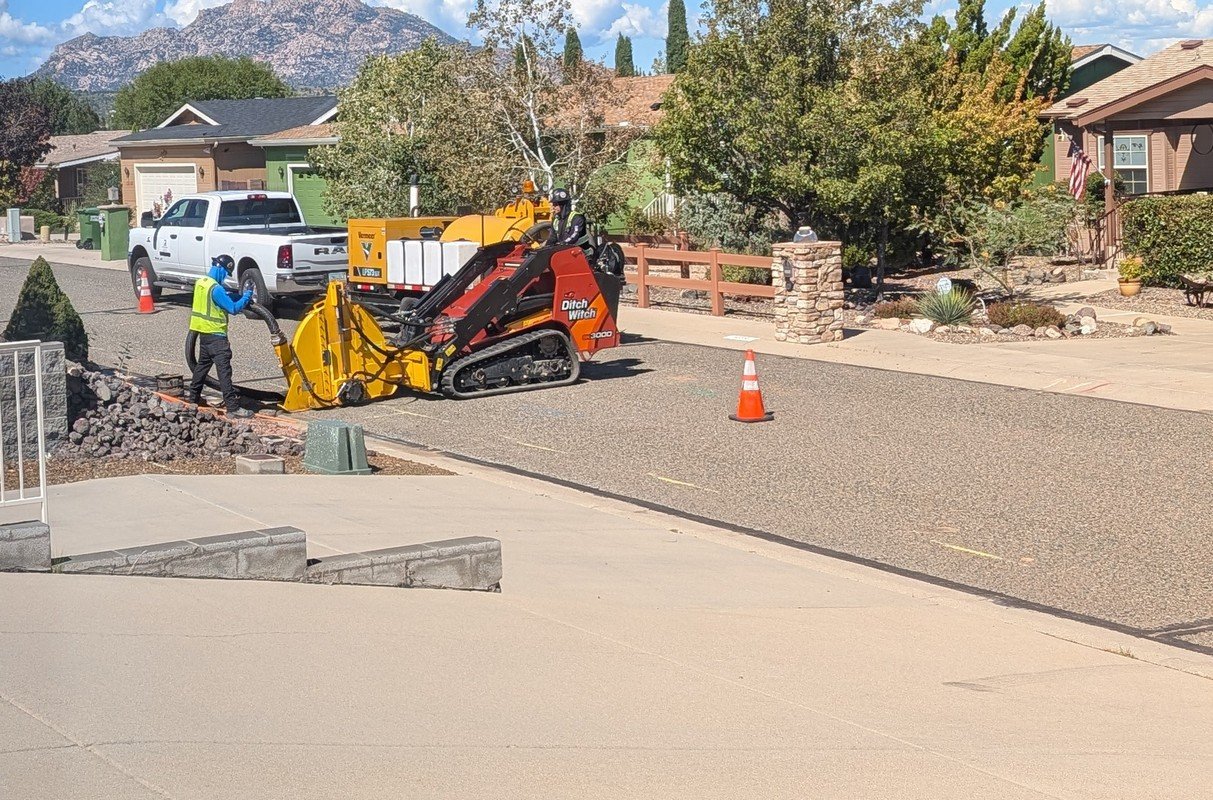
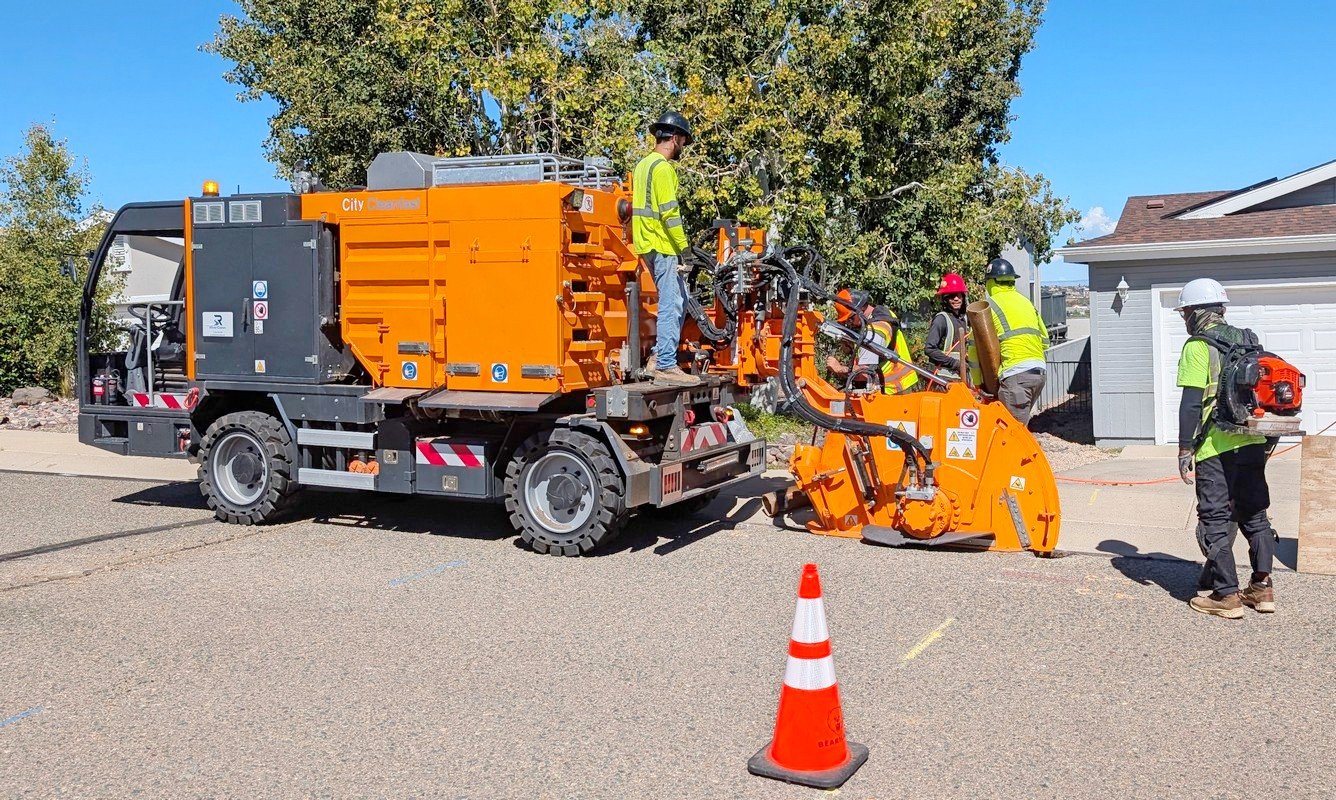
The skid steer was nimble enough to cut half way across the street, then turn around and do the other half. The large truck just ran along the edge of the road very slowly cutting
that slot. Occasionally the skid steer, now with the bucket on the front, would come and catch dirt dumped by the truck. The large orange compartments on the rear would tip sideways
and dump 3 or 4 buckets of dirt and debris which the skid steer would then take and dump into a large trailer, and then return for another load.
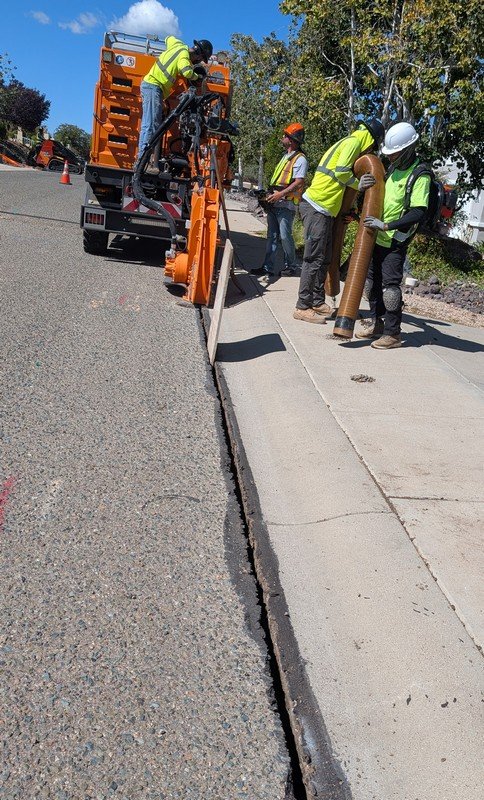
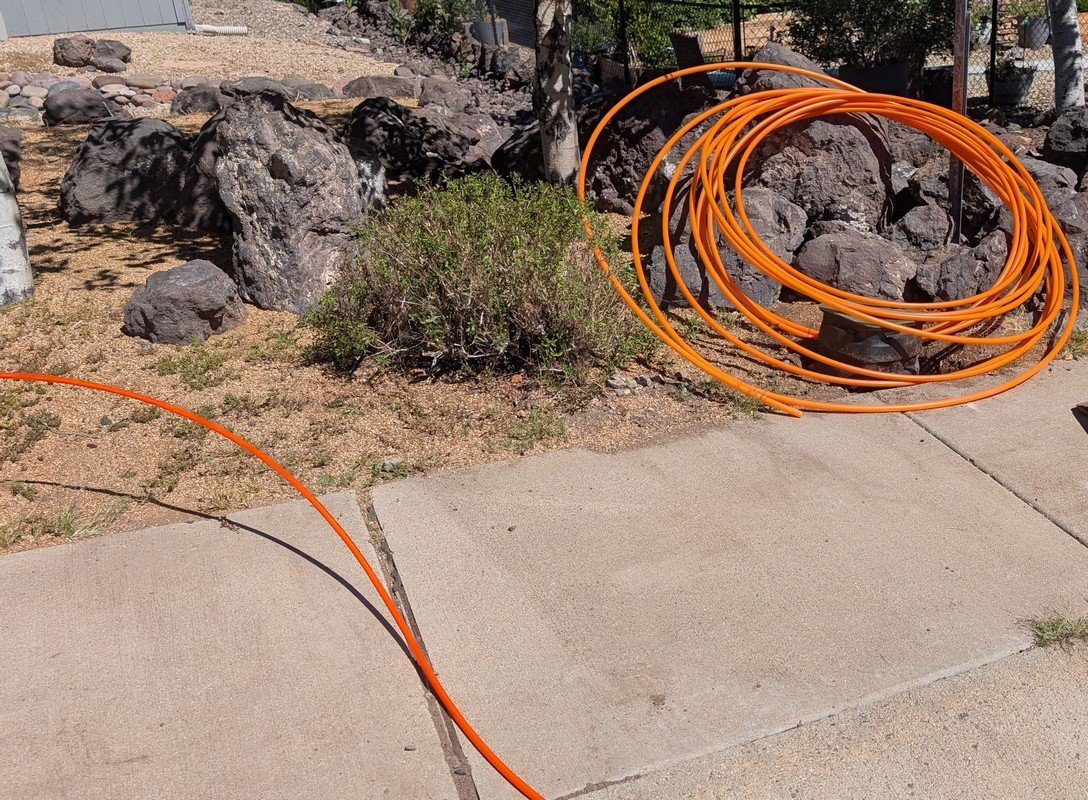
The left picture shows the slot which was just cut by the saw. The board sticking out of the slot is used to tamp the bottom of the slot smooth.
The right shows the two types of conduit they were running.
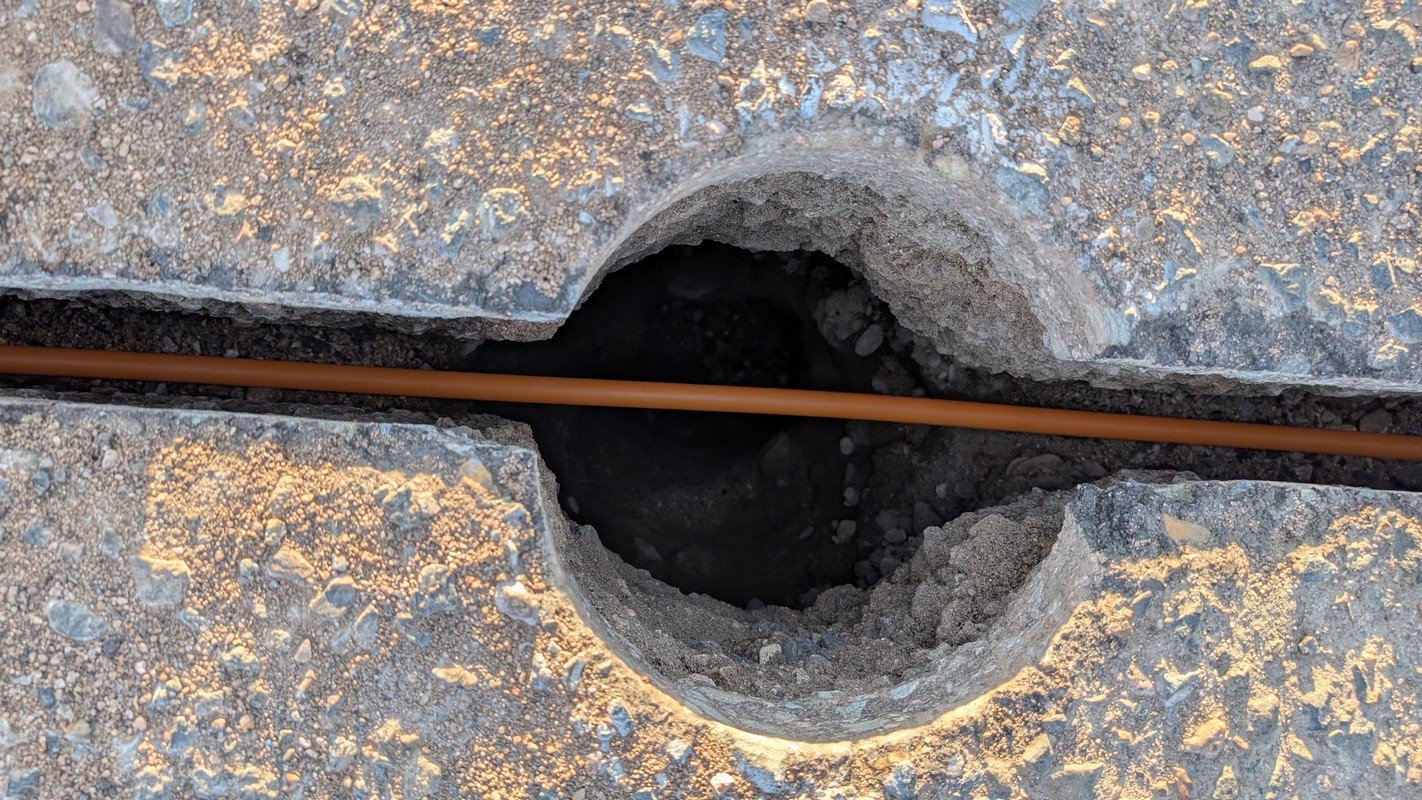
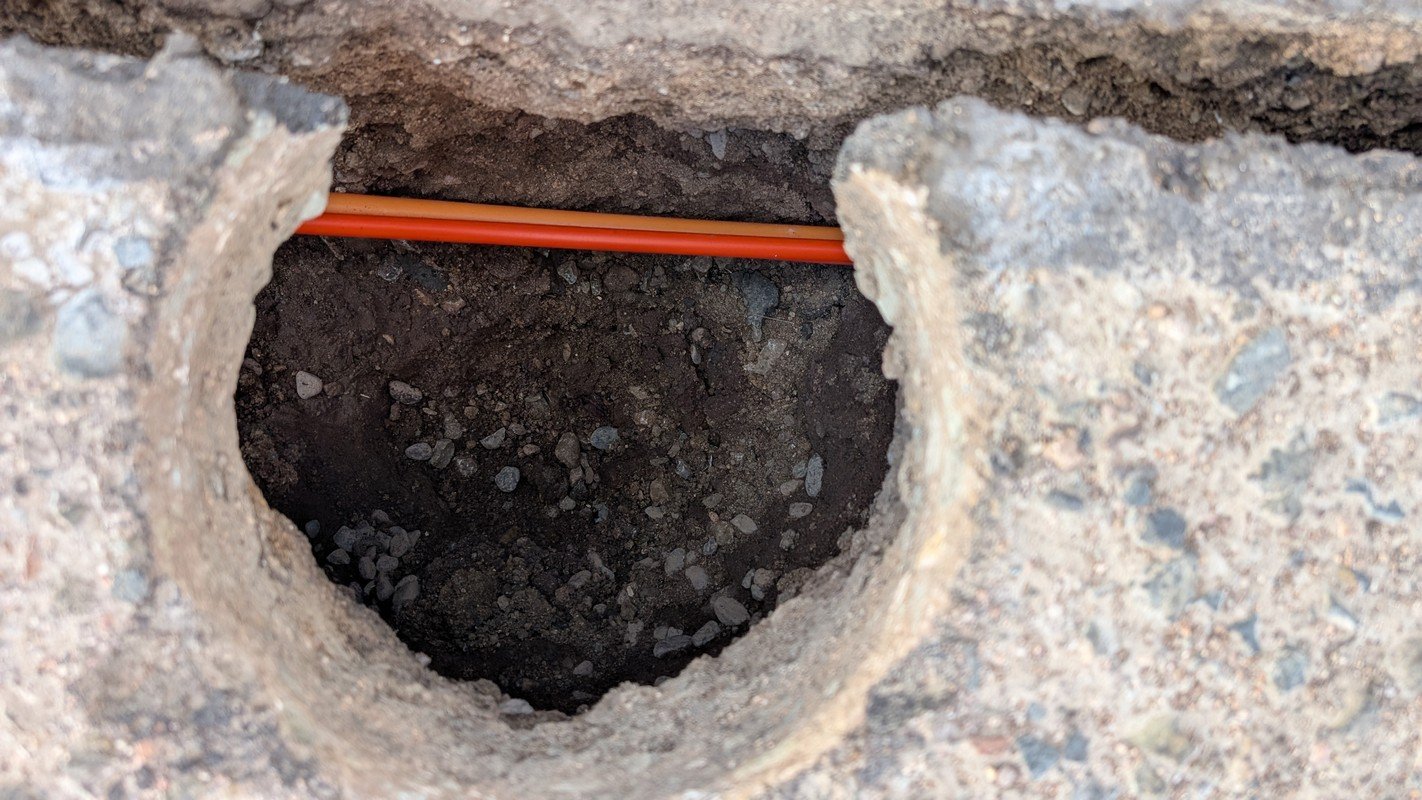
These are a couple areas showing the conduit in place. The left is the distribution to my house, and the right is a hand hole at the main slot.
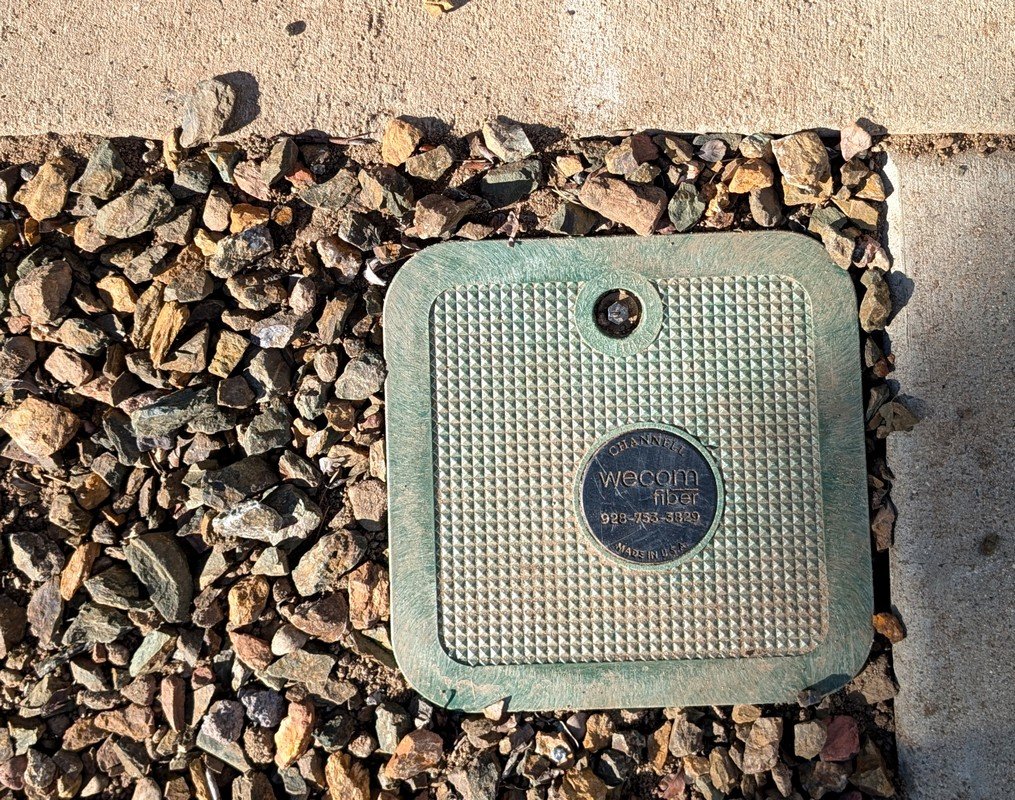
Here is the distribution box for my house at the very north-east corner of my property.
At this point all the needed conduit has been placed in the slots, but not protected. As the 10 man crew was struggling to get to this point (they even worked through their normal lunch break), they left the slots open over night, but had a "night watchman" stay in his pickup truck all night to assure no problems. The first thing the next morning, on Saturday, the crew showed up to fill the slots. They used a concrete mix with apparently no gravel, very much like a mortar, to fill all the slots and hand holes.
The equipment they used for this filling process was very unique: There was a large 6 axle truck which appeared to carry a large container of dry concrete mix and another of water. It looked like it was actually feeding the dry mix and water and doing the mixing needed to then dispense the wet concrete at a fairly slow, but continuous rate out its scoop. There was also a small dispenser cart which carried what appeared to be a mortar mixer and some type of discharge hose or pipe. It would drive slowly along the slot and fill it with the concrete. It was accompanied by a worker with a shovel who was tamping the filled slot and cleaning up the edges. When the cart was out of concrete it drove to the truck and over a several minute period it was re-filled. This re-filling was needed about once or twice per house width. The end result was that all the slots and hand holes were filled to about an inch below the surface. I assume the last inch will be filled at some point with either more concrete or with street tar.
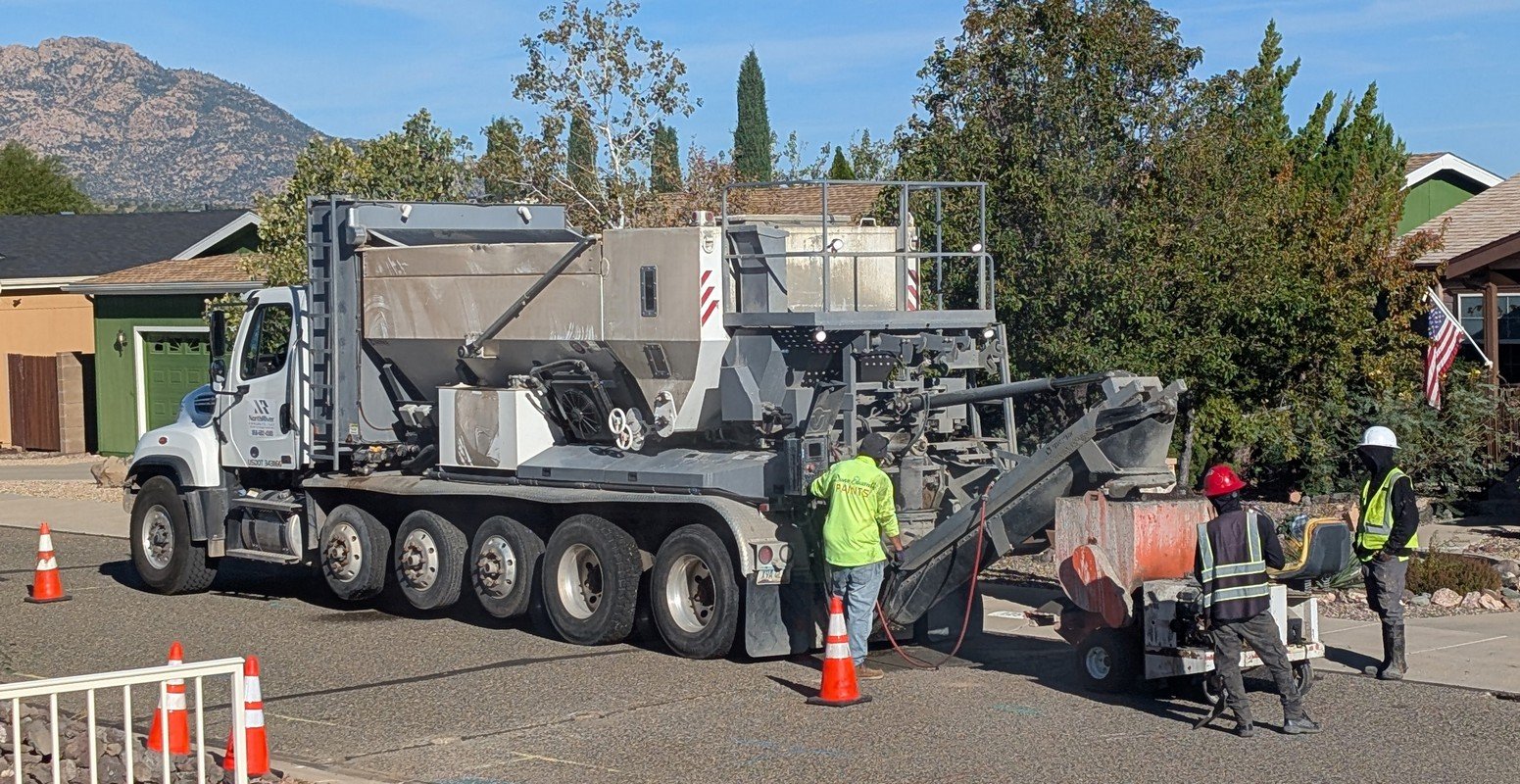
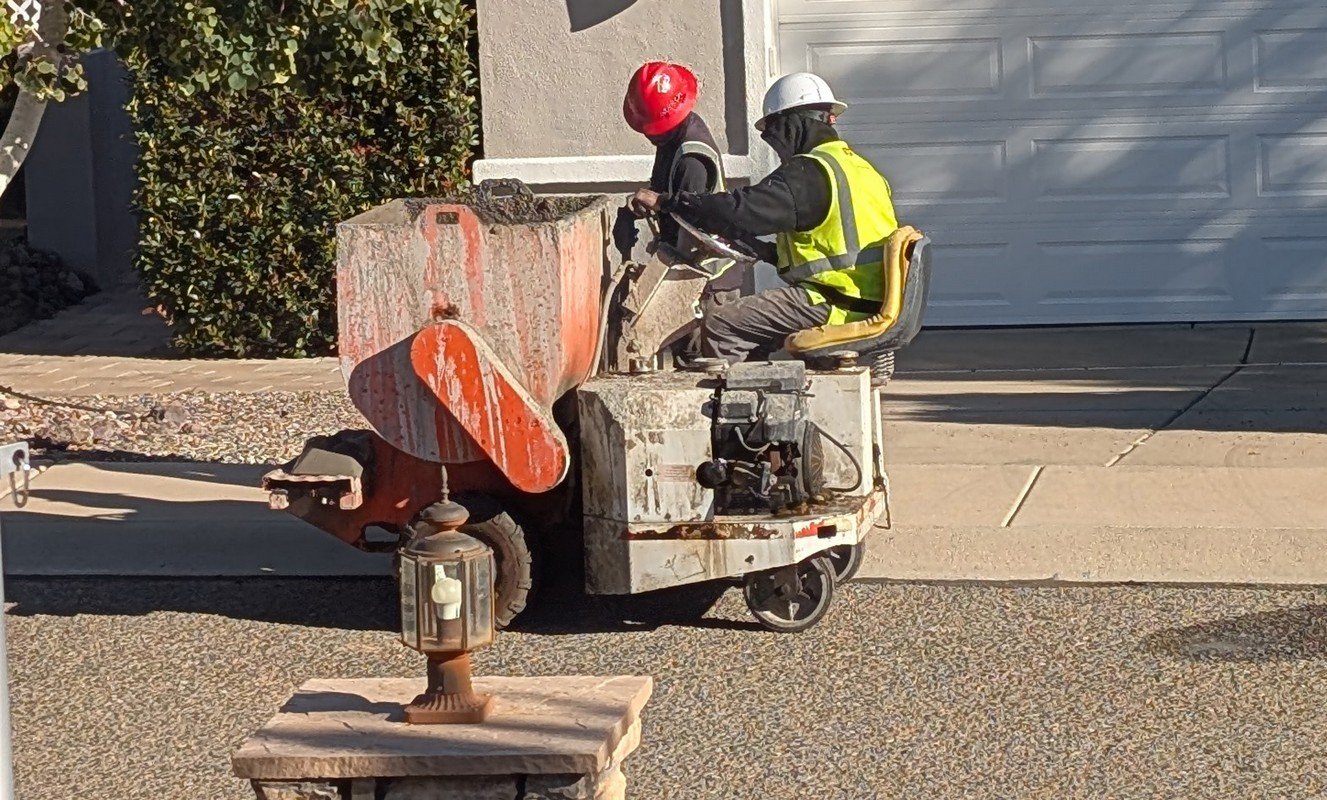
The truck on the left appears to be a "mix on demand" operation, only mixing the concrete as it is needed at the time it is needed. The cart on the right is what
actually pumps the concrete into the openings in the street.
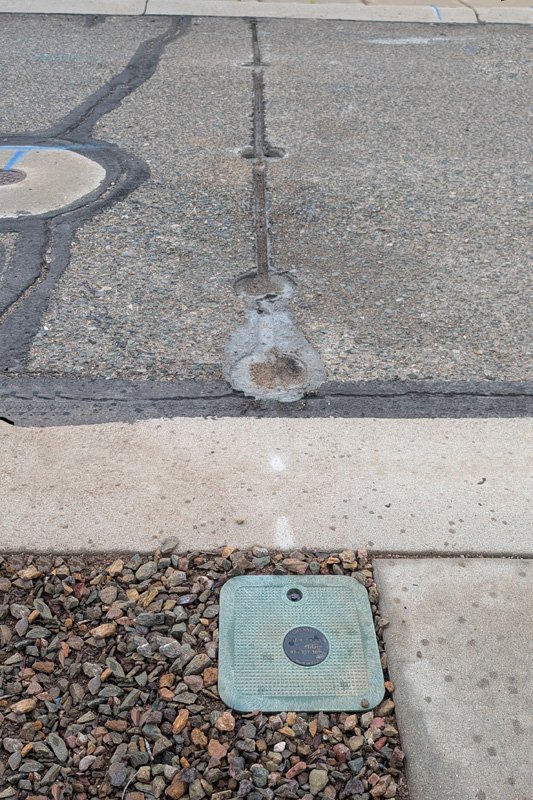
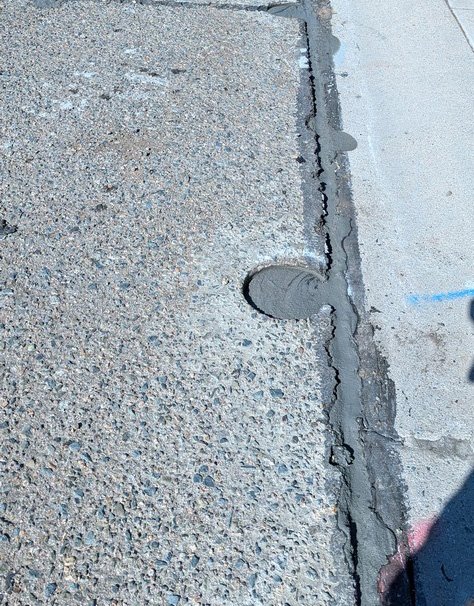
The left shows the cross street slot which feeds my distribution box. It appears they somewhat over filled the closest hand
holes. The right shows a section of the main slot and one hand hole after filling. It is truly filled, although the shadows make it
look like there is a gap.
- All the distribution vaults and individual distribution boxes are in place
- The conduit for the fiber cables is all in place to each property line, but not necessarily to the main office
- The road repair is complete to a safe degree, but is missing the top sealing
- The road repair needs to be completed
- The installation needs to complete between the main office and this neighborhood
- The fiber cables need to be run
- Trenches need to be dug and conduit and fiber cables need to be run from individual distribution boxes to and into each subscriber's house
GO BACK
R. S. Mason September 2026